For most of its life, American Truck Simulator has been about one thing: getting behind the wheel of a big truck and moving freight across the United States. Road Trip changes that formula more than any normal vehicle DLC ever could.
Instead of simply adding passenger cars to the existing trucking career, SCS Software has built a separate Car Mode with its own jobs, progression, vehicle ownership, exploration features and interface. Trucks are still at the heart of ATS, but they are no longer the only way to experience its enormous map.
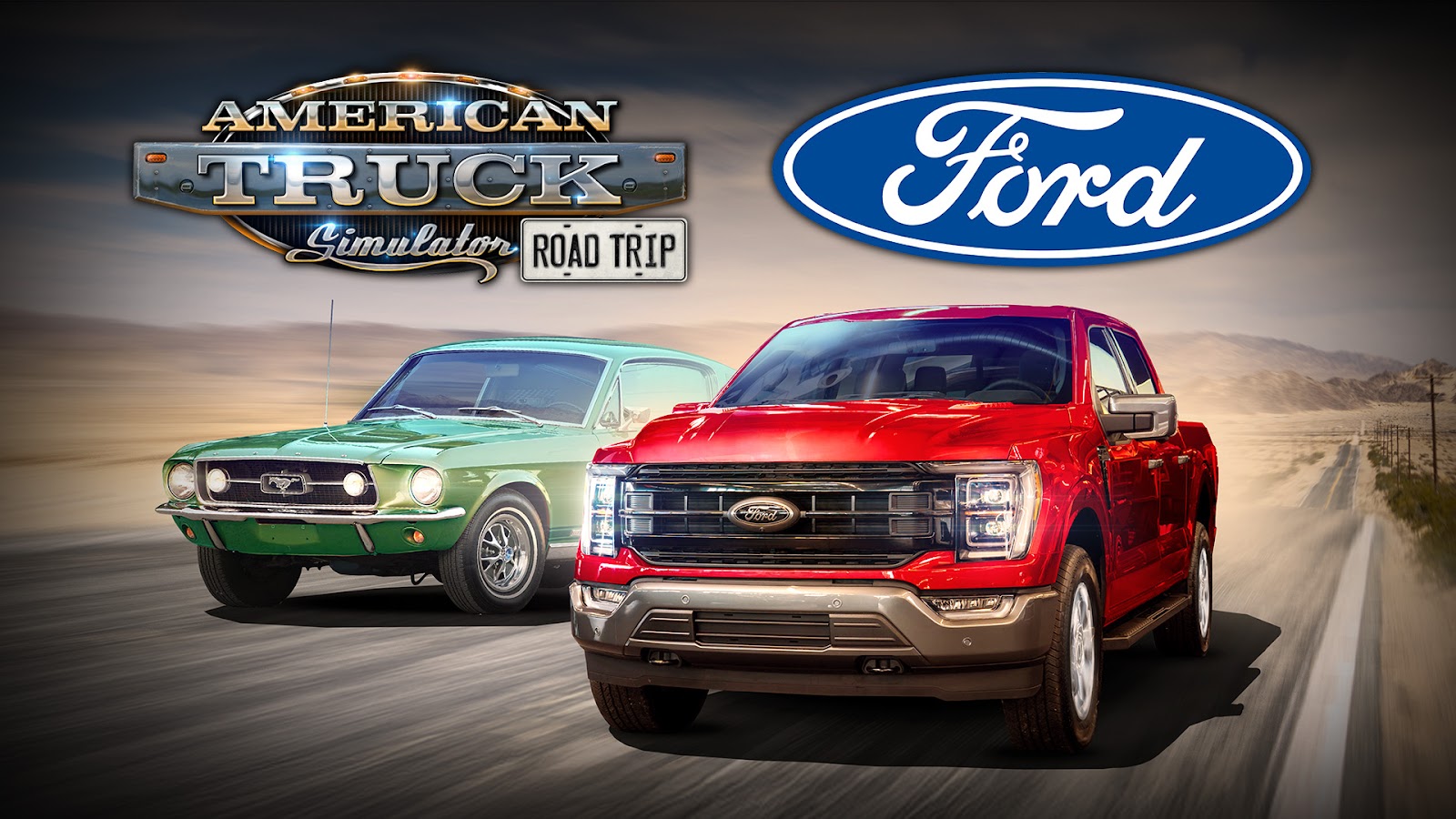
The first part of that new direction arrives with Road Trip: Ford, bringing the 1967 Ford Mustang Fastback, 2023 Ford F-150, 2023 Ford Bronco and Ford Crown Victoria to the game. A RAM & Dodge pack is also in development, with another four American vehicles planned.
Road Trip: Ford releases September 29, 2026
Buying a Road Trip vehicle DLC does more than add its cars. It also unlocks the Road Trip gameplay module itself, including Car Mode and the features built around it.
What originally sounded like a fun side project has grown into a fairly substantial expansion of ATS. SCS has developers working on new gameplay systems, car physics, map content, vehicle models, traffic integration and exploration mechanics. The studio has also said Road Trip has its own dedicated team, so development of trucks, trailers and map expansions continues alongside it.
The Ford Car Pack: four very different American cars
SCS could have started Road Trip with four similar modern cars. Instead, the Ford pack covers several very different parts of American car culture: a modern pickup, a serious off-roader, a classic muscle car and a full-size sedan that became almost synonymous with taxis and police departments.
2023 Ford F-150 Lariat

The 2023 Ford F-150 Lariat is probably the most natural bridge between traditional ATS and Road Trip. It is still a large working vehicle, but from the driver’s seat the experience is completely different from hauling a semi-trailer.
Ford’s F-Series has been part of American roads for generations, and the F-150 has spent decades near the top of the US vehicle sales charts. SCS is recreating the Lariat version with a detailed cabin, recognisable exterior and a selection of factory-inspired paint colours including Agate Black Metallic, Iconic Silver Metallic and Atlas Blue Metallic.
The F-150 was also the first Road Trip vehicle SCS showed in an extended gameplay preview. The demonstration started around Redding, California, before moving away from normal paved roads and onto rougher dirt surfaces. That was a useful first look at how passenger-vehicle physics could feel in ATS, rather than simply seeing another 3D model in a showroom.
1998–2012 Ford Crown Victoria

The Crown Victoria gives the pack a completely different personality. Built on Ford’s rear-wheel-drive Panther platform, the big sedan became one of the most familiar vehicles on American streets during the 1990s and 2000s.
Police departments used huge numbers of Crown Victoria Police Interceptors, while taxi fleets turned the same basic car into an equally recognisable part of city traffic. Even people who know little about American cars have probably seen one hundreds of times in films and television.
SCS actually asked its community for help finding real examples of Road Trip vehicles. That led the team to Marcel in Germany, who owns an ex-supervisor Crown Victoria P71 Police Interceptor. The developers inspected the car, gathered reference material and recorded its sounds.
The reference car does not necessarily mean that ATS is receiving a fully equipped police version. The Ford pack itself is presented as a 1998–2012 Crown Victoria. What the P71 gave the developers was access to a real Panther-platform car and its characteristic mechanical and audio details.
1967 Ford Mustang Fastback

If the F-150 represents modern everyday America, the 1967 Mustang Fastback is the opposite end of the pack: a piece of automotive history.
The 1967 model brought a wider and more aggressive shape to the Mustang, while still retaining the long bonnet and unmistakable fastback profile that made the early cars famous. For Road Trip, SCS has spent considerable time reproducing both the exterior and its period interior.
Factory-inspired exterior colours shown during development include Lime Gold, Acapulco Blue, Dark Moss Green, Silver Frost, Burgundy and Candy Apple Red. Interior choices include Black, Red, Saddle, Parchment, Ivy Gold and Dark & Light Aqua, together with different seat styles and a Deluxe interior with brushed aluminium details.

The car has also been used to show Road Trip itself in motion. SCS demonstrated a drive from Carson City, Nevada towards Yosemite National Park, mixing faster roads with scenery that makes much more sense when you are travelling for the journey itself rather than trying to get a trailer to a depot.
Ford helped SCS locate a classic Mustang during one of the team’s visits to the United States, while other real vehicles were made available for detailed measurements, photography and sound recording.
2023 Ford Bronco Badlands
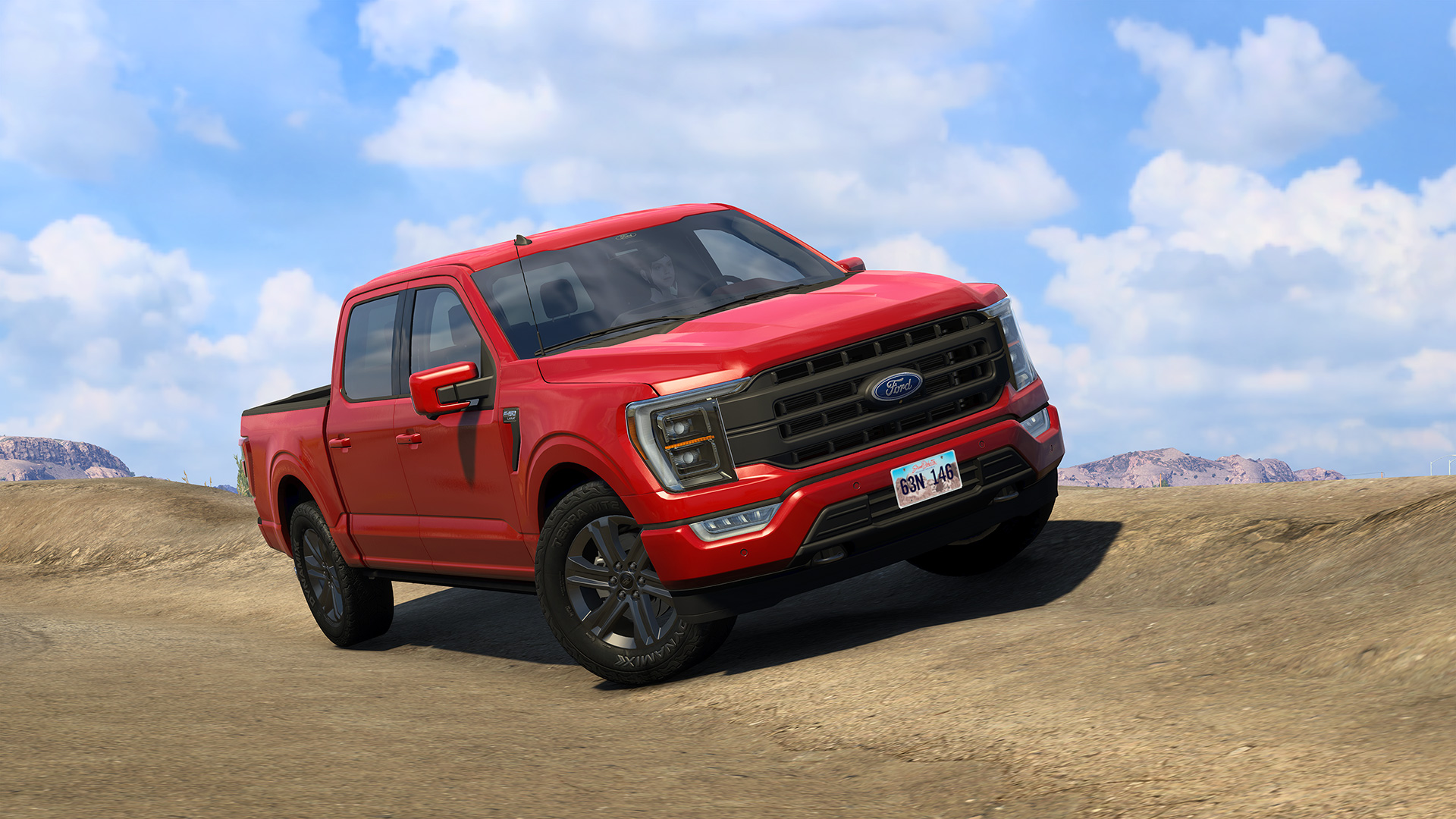
The fourth Ford is the 2023 Bronco Badlands. It gives Road Trip a proper off-road-oriented SUV and should feel very different from both the Mustang and Crown Victoria.
The modern Bronco returned in 2021 after a long absence, but kept much of the boxy styling that made the original model recognisable. The Badlands version is one of the more capable configurations, designed around rough terrain rather than simply borrowing the Bronco name for a normal road SUV.
SCS has shown factory-inspired colours including Azure Gray, Cactus Gray, Eruption Green, Pepper Red, Velocity Blue and Yellowstone. The developers have also highlighted the Bronco’s modern terrain-focused hardware and the contrast between this vehicle and the much older cars in the same pack.
One pack, four very different reasons to drive
The Ford lineup makes Road Trip’s intention fairly clear. The cars are not four skins for the same experience. A classic Mustang, Crown Victoria, F-150 and Bronco naturally encourage different types of journeys, even before the job and exploration systems are taken into account.
How Road Trip unlocks
SCS has designed Road Trip as one shared gameplay module rather than a new mode that must be purchased separately from every vehicle pack.
Owning a Road Trip vehicle DLC unlocks the Road Trip gameplay itself. Buying the Ford DLC therefore gives you the Ford vehicles and access to Car Mode. The same principle applies to the upcoming RAM & Dodge pack and is intended to apply to future Road Trip vehicle packs as well.
That makes later packs more like expansions to a growing car ecosystem. You gain additional brands and vehicles without having to buy the underlying gameplay again.
Road Trip has real jobs, not just free driving
One of the biggest questions after Road Trip was announced was simple: what are players actually going to do with the cars?
Free driving is part of the answer, but SCS has also created a separate courier career using familiar ATS ideas in a different way. Road Trip has its own versions of Quick Jobs and the Freight Market, along with customer reviews and a rating system that replaces the normal trucking XP progression.
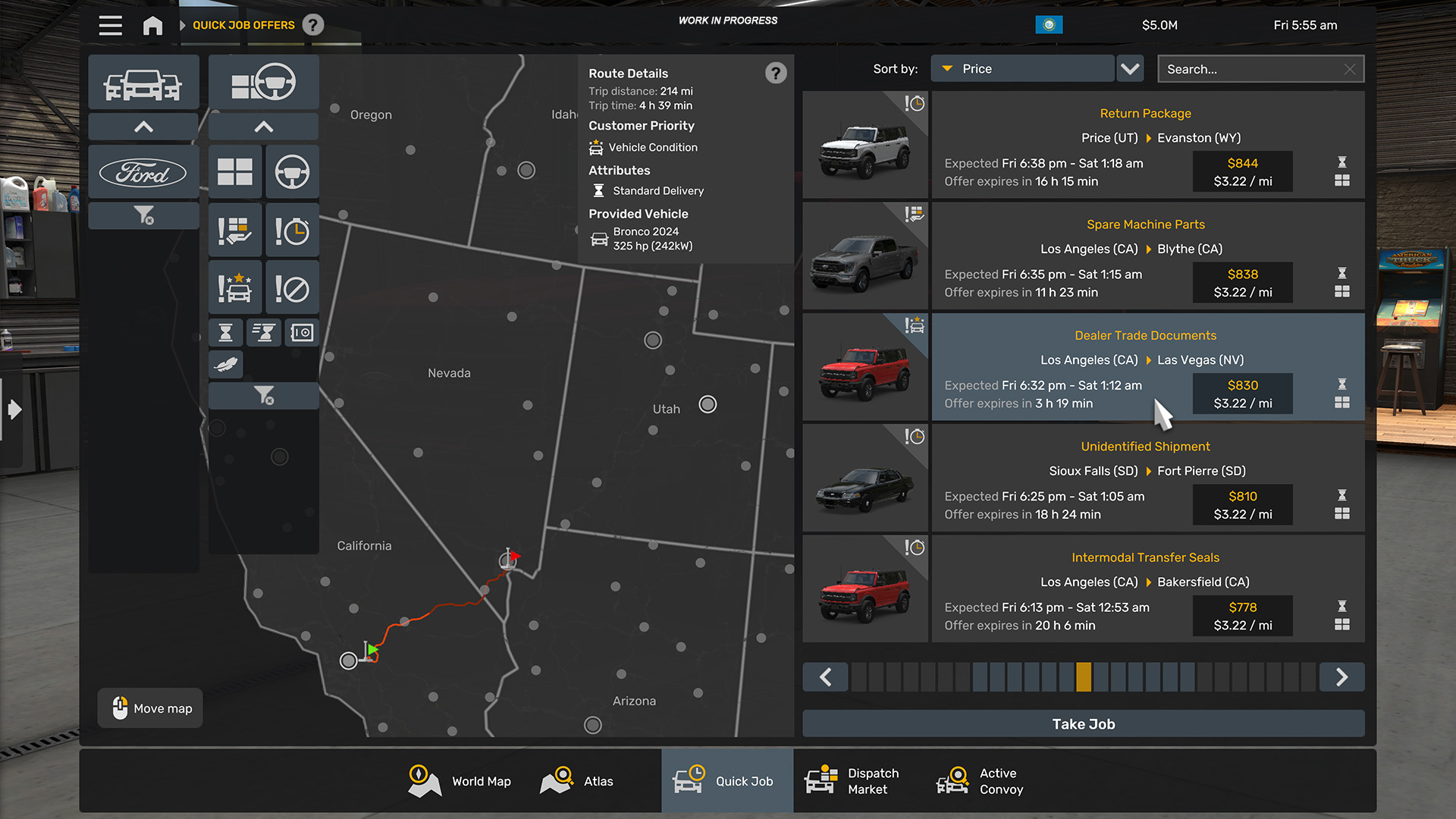
Quick Jobs give you a car
Road Trip Quick Jobs work on the same basic principle as truck Quick Jobs. You do not need to own a car. The company offering the job provides a suitable vehicle, allowing a new Road Trip player to start working immediately.
Because the vehicle belongs to the company, fuel, repairs and other operating costs are covered as part of the job. This gives players a way to try different cars before spending their own money on one.
The work itself is much smaller-scale than traditional freight hauling. Jobs can involve packages, documents and vehicle transfers between dealerships. The available contracts can also depend on the kind of car being used. A pickup truck does not necessarily receive the same work as a sports car or classic sedan.
Customers actually review your driving
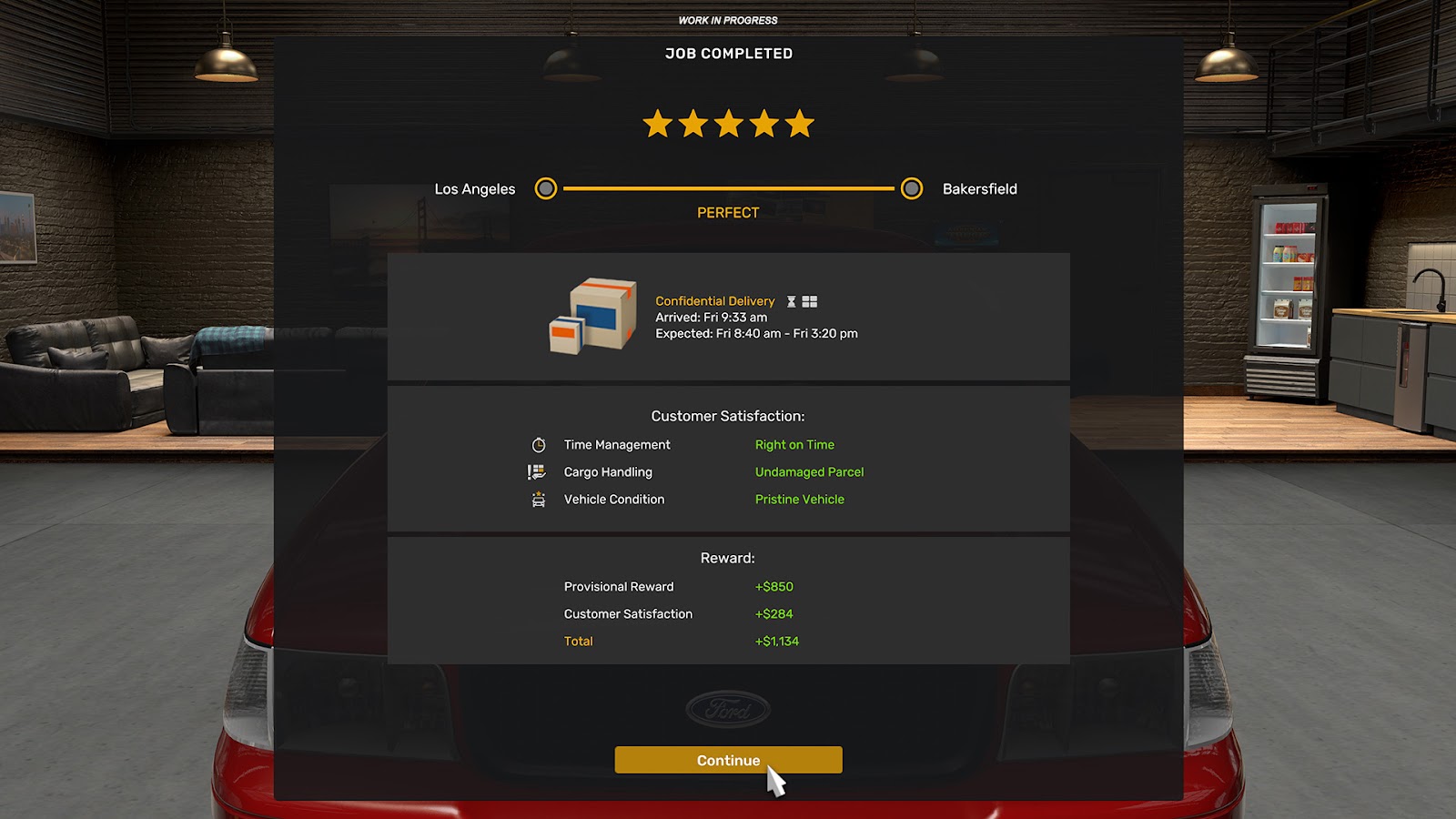
Finishing the trip is only part of a Road Trip job. At the destination, the customer rates how well you handled it.
Three areas are judged: Time Management, Vehicle Appearance and Cargo Handling. That means smashing the car into barriers and arriving with a damaged package will matter even if you eventually reach the destination.
Time Management is also more interesting than a standard countdown timer. Customers expect you within a particular window. Arriving late is bad, but arriving far too early can be unwelcome as well.
Some customers care more strongly about one category than another. You can see those priorities before accepting the contract. Taking on a demanding customer can make the job harder, but the financial reward can also be better.
Courier Rating replaces normal XP
Every completed delivery receives a star rating. Those results contribute to your overall Courier Rating, which is one of the main forms of progression in Car Mode.
A stronger rating opens access to more difficult jobs, longer routes and better-paying work. Fragile or valuable deliveries and tighter arrival windows become available as your reputation improves.
Players who repeatedly achieve five-star deliveries can also build a Perfect Delivery Streak. Keeping the streak alive provides an additional money bonus, giving careful driving a direct financial reward.
The Dispatch Market is for your own cars
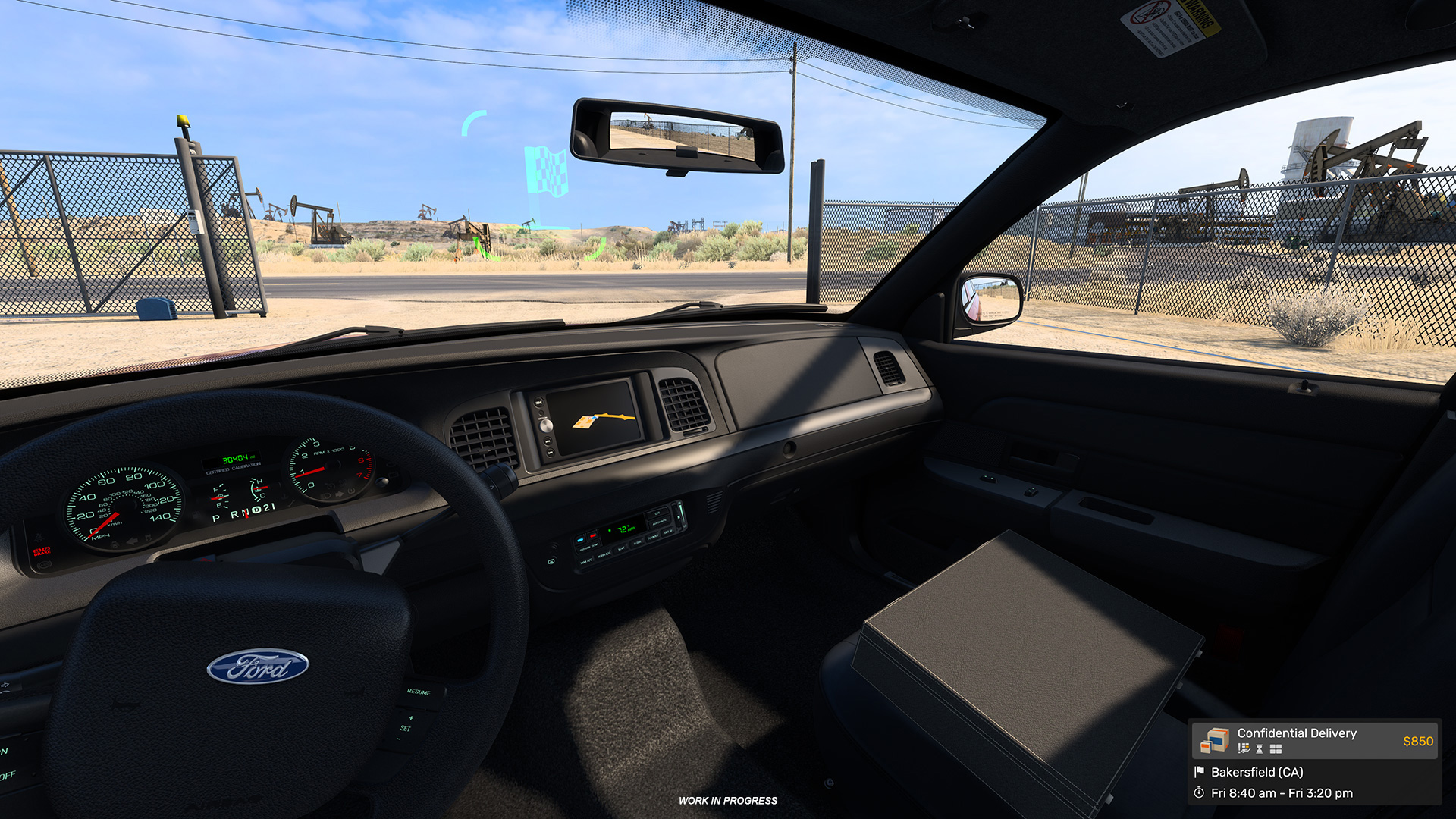
Once you own a car, another market opens up. Road Trip calls it the Dispatch Market.
This works much like the Freight Market in the trucking career: instead of borrowing a company vehicle, you take the job using a car from your own garage.
Because you provide the vehicle yourself, the payout is slightly higher. The trade-off is that fuel and repairs are now your responsibility.
The same customer reviews, Courier Rating and delivery-performance rules apply. Some contracts naturally differ from Quick Jobs; for example, a job that involves transferring somebody else’s car would make little sense if you were supposed to complete it in your own vehicle.
Your trucking money and Road Trip money are the same money
Road Trip does not create a separate bank account. Earnings from courier work go into the same ATS profile used by your trucking company. The careers have separate progression, but the economy remains connected.
Buying and customizing your own cars
Passenger cars also get their own ownership system rather than being squeezed into the existing Truck Dealer interface.
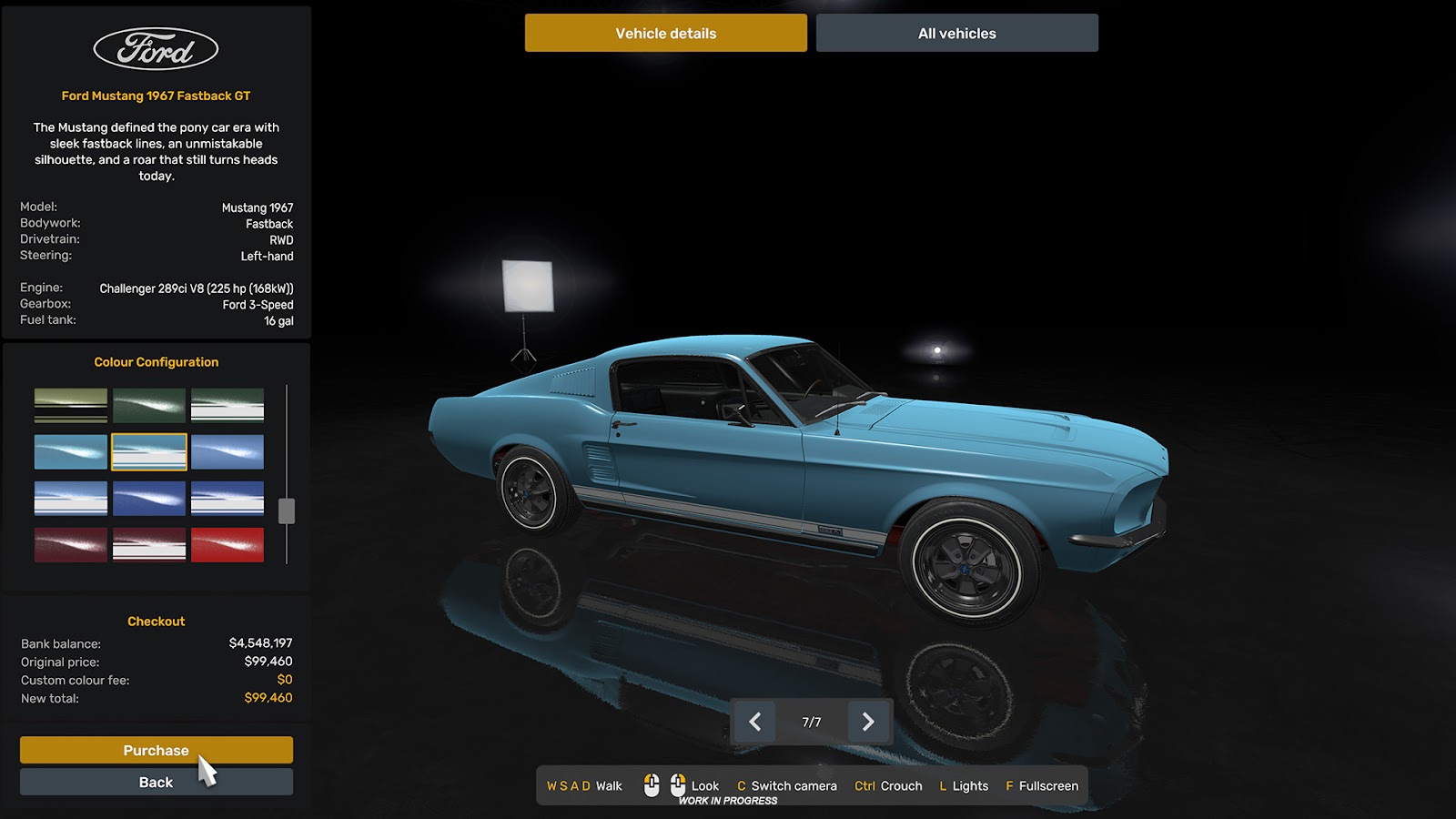
The new Car Dealer
The in-game desktop includes a dedicated Car Dealer tab. The manufacturers shown there depend on the Road Trip DLCs installed on your profile.
With only the Ford pack, Ford is available. Owning both announced packs adds RAM and Dodge as well.
After selecting a brand, you can browse individual models, inspect them from different angles, look at their lighting, read their descriptions and check technical specifications.
SCS has created both a catalogue-style view and a comparison table, so cars can be compared side by side rather than opening each one individually. Exterior colour can also be selected before purchase.
My Cars is a separate garage for passenger vehicles
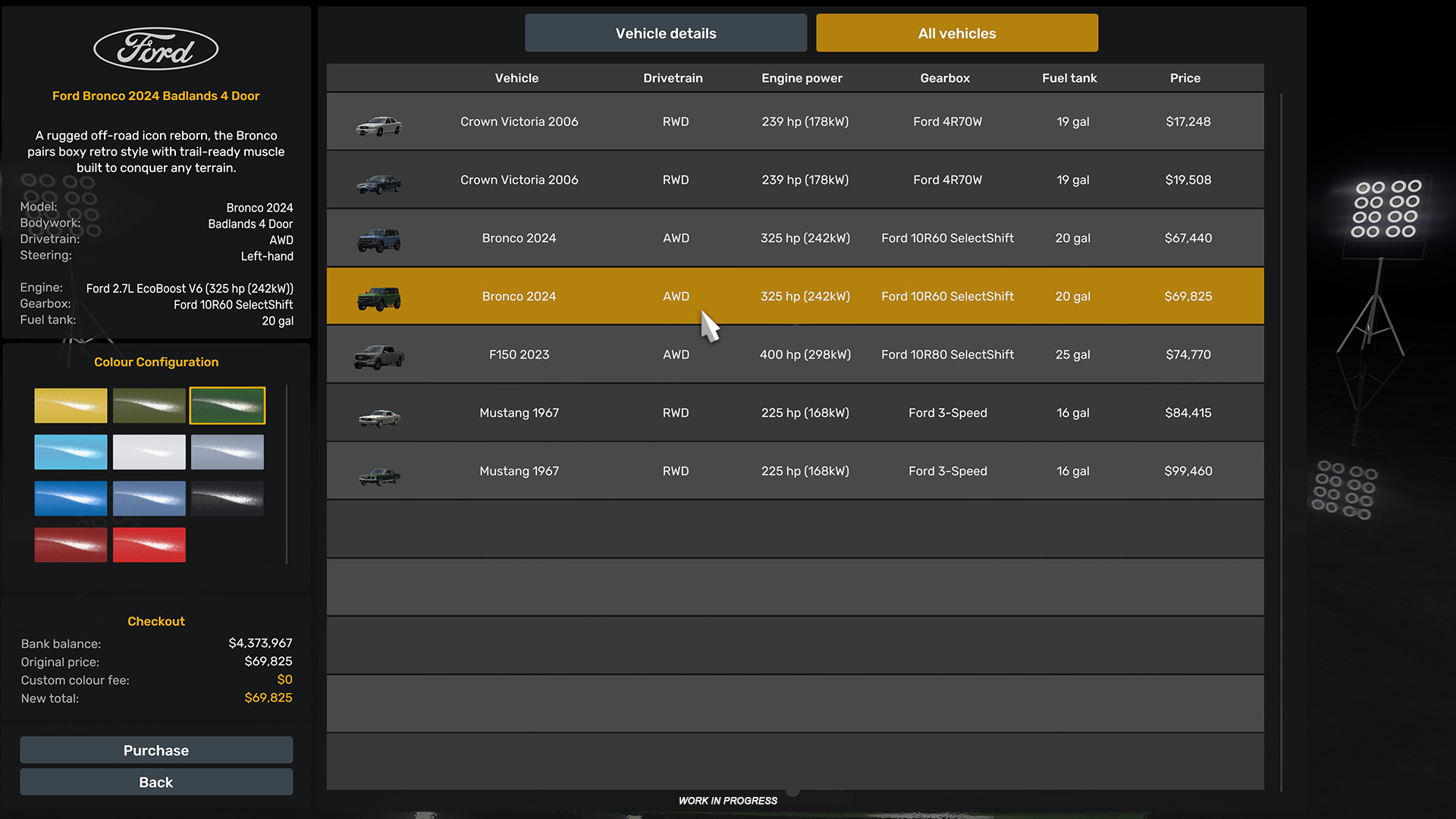
Cars you own are managed through the new My Cars section. It acts as a virtual passenger-car garage where you can inspect, configure and sell your vehicles.
Customization varies by model but includes paint schemes together with exterior and interior parts. Some ATS cabin accessories will also work in Road Trip cars, so the dashboard can still have some of the personal touches players already use in trucks.
SCS has said it is still researching additional customization possibilities, suggesting the launch system is intended as a base that can grow over time.
Atlas finally gives exploration its own gameplay loop
ATS has always had players who ignore jobs for a while and simply drive around the map. Road Trip turns that style of play into an actual game system through Atlas.
Atlas lives under the Navigation section of the in-game desktop. Its starting points are Tourist Boards placed around the map.
Select a Tourist Board and the GPS can guide you towards it. Reaching the board reveals a group of exploration locations spread around the surrounding region.
Points of Interest, Viewpoints and Photo Trophies
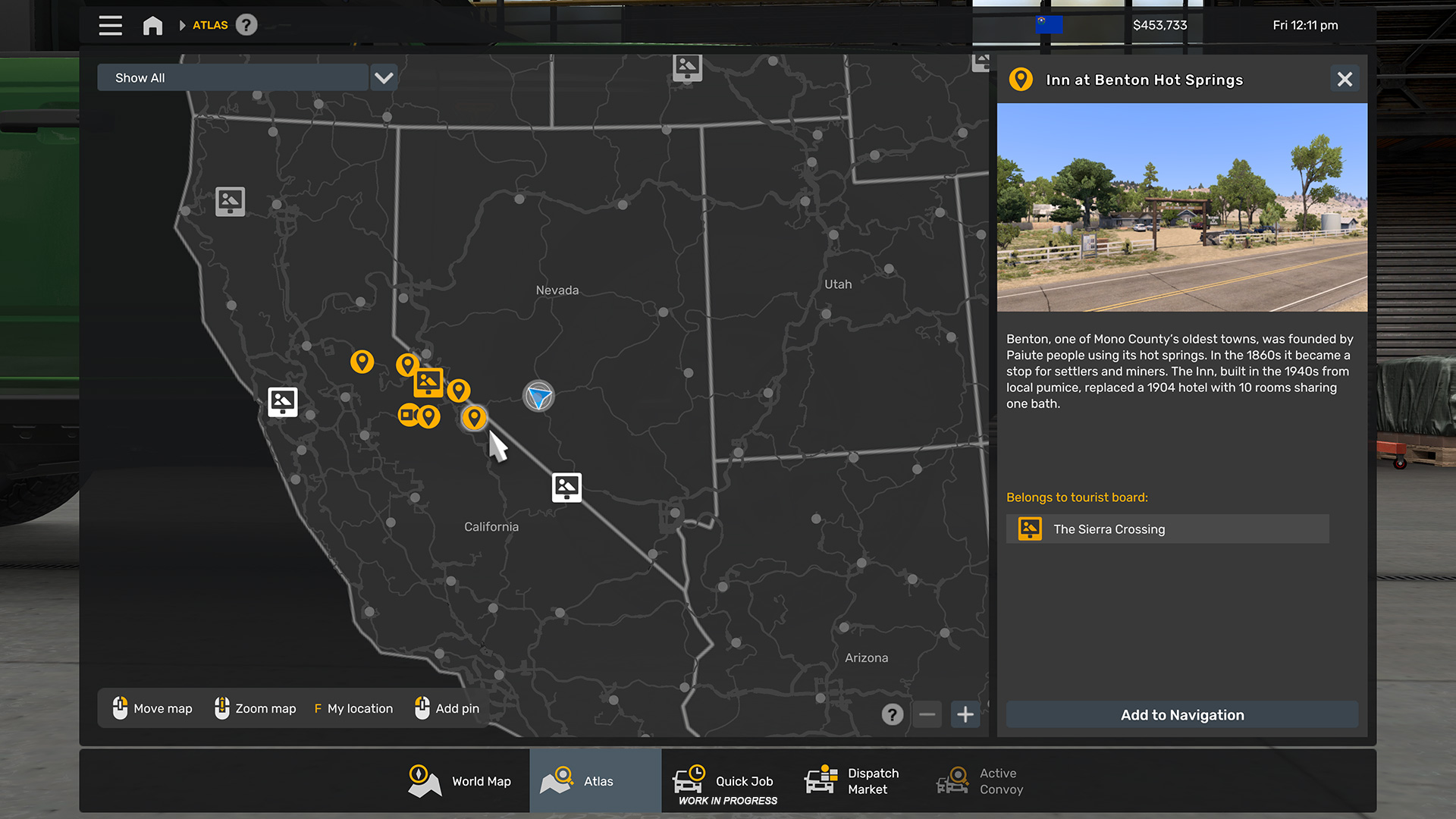
The locations connected to a Tourist Board can include existing Viewpoints and Photo Trophies, but Atlas also introduces Points of Interest.
Points of Interest are designed to be less intrusive than a traditional trigger. You do not have to stop, park perfectly or activate anything. Driving through the correct area is enough to discover the location.
Once discovered, the game displays an exploration notification and unlocks a short description of the place. It can later be revisited through the Atlas interface.
There is even a live camera view for explored Points of Interest. If your vehicle is currently parked at that location, it appears in the camera feed.
Complete an area and earn a postcard
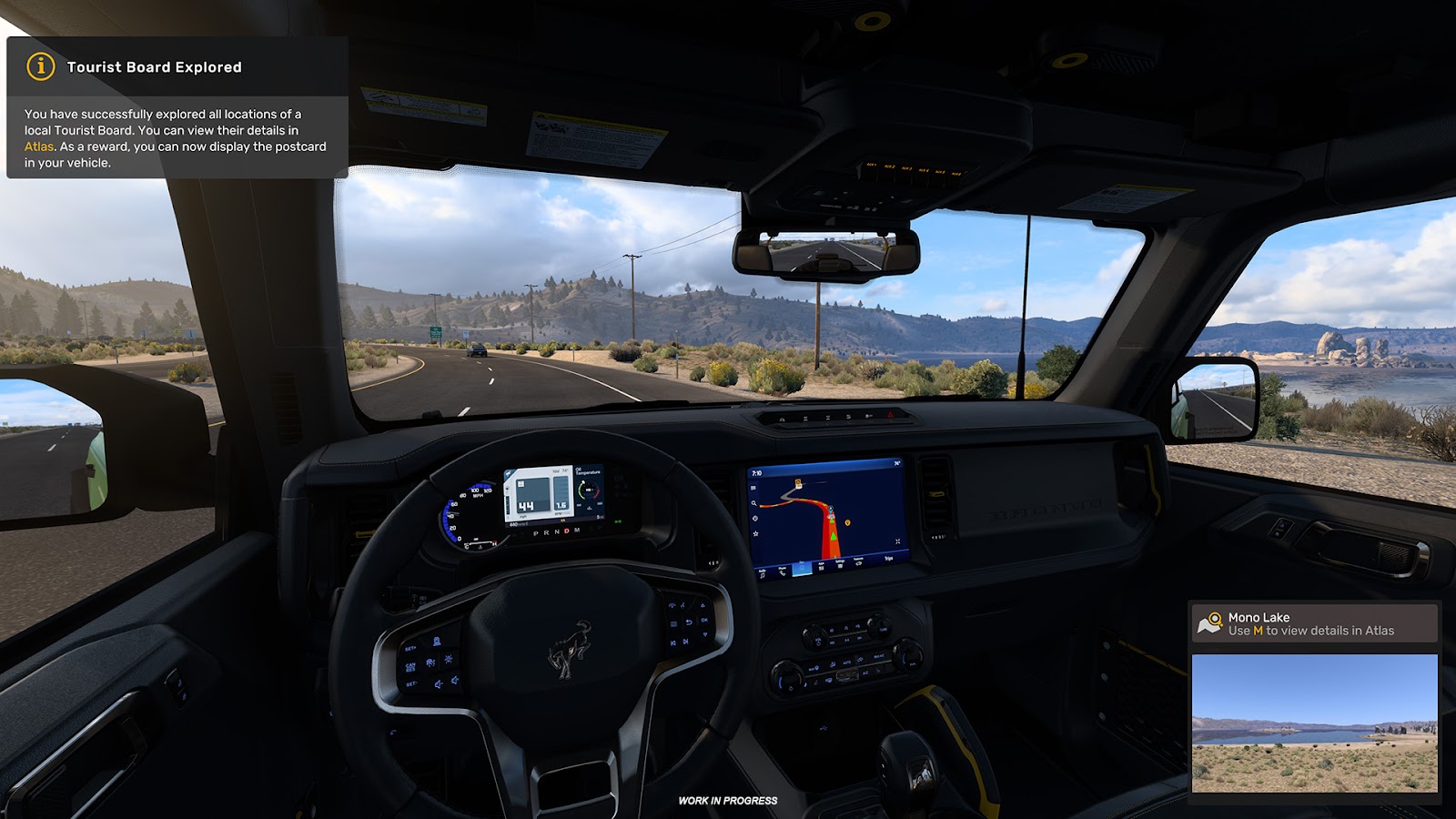
Completing every exploration location connected to a Tourist Board finishes that board’s set. The reward is a unique postcard based on the region.
The postcard is not just an achievement icon buried in a menu. It can be displayed on the dashboard of your vehicle.
Atlas also keeps the discovered locations, descriptions and unlocked cutscenes available for later viewing, so it gradually becomes a record of where you have explored.
Atlas also works in trucks
Interestingly, Atlas is not exclusive to Car Mode.
You need to own a Road Trip DLC to unlock the feature, but once it is unlocked you can visit Atlas locations in a truck as well. That means players who have little interest in passenger cars still gain a new exploration system for the traditional ATS career.
Road Trip becomes a separate Car Mode
Road Trip also forced SCS to rethink how several different careers can live inside one ATS profile.
The result is Mode Switch. American Truck Simulator now distinguishes the existing Truck Mode from the new Car Mode, while the same broader architecture is being used for Coach Mode in Euro Truck Simulator 2.
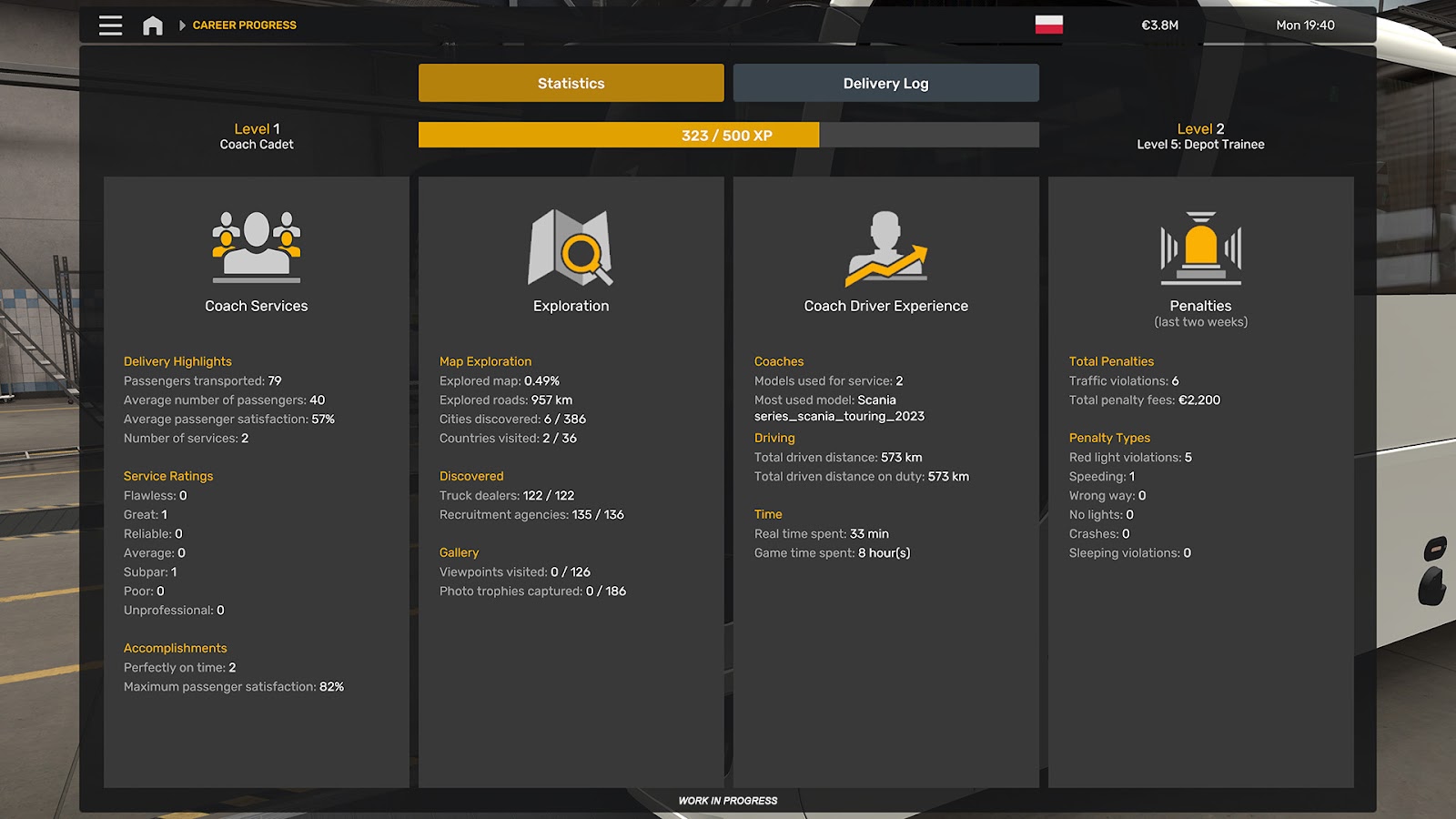
Separate careers, shared world
Truck Mode keeps traditional freight, XP and company progression. Car Mode focuses on courier reputation and exploration. The systems are separate where they need to be, but money, map discovery and your overall profile remain connected.
Car Mode does not use truck XP
Road Trip progression is based around reputation and the Courier Rating rather than the XP and skill-point structure used in Truck Mode.
This allows SCS to balance car jobs independently without pretending that hauling a small document package is equivalent to transporting a heavy trailer across several states.
Map discovery carries between modes
The roads you discover in a passenger car stay discovered when you return to your truck. The same works in reverse.
This is an important detail because Road Trip encourages detours and sightseeing. Spending an evening exploring mountain roads in a Mustang still contributes to the same map completion as your trucking career.
How switching works
You can enter another mode while you are not driving and browse its vehicles, statistics and career information.
Only one active job can exist across the modes at a time. The actual switch takes place when you press Drive.
There is currently a small limitation with navigation. Before driving, route planning remains connected to the mode you last drove. Once the new drive begins, the correct navigation and gameplay systems activate. SCS has already said it wants to make that transition smoother in future updates.
Your truck and car keep their own locations
Switching to a car does not magically teleport your truck along with you.
The game remembers where each vehicle was left. If your truck is parked in one city and you spend time elsewhere in a car, returning to Truck Mode puts you back where the truck was left.
The map can also show the position of your other vehicle and your current position during a Quick Job.
Fatigue is shared, mandatory breaks are not
The new career structure also explains recent changes to the fatigue system.
Fatigue is split into Rest State and Mandatory Breaks. Rest State represents how tired your character is and carries across modes. Switching from a truck into a Mustang therefore does not magically make the driver rested.
Mandatory Breaks represent legally required rest periods. They apply to trucks and coaches, while cars are not subject to them.
ATS itself is being modified to support cars
Road Trip is not simply a DLC that drops vehicle models into the existing map. Parts of American Truck Simulator have already been changed to make the world work better from the perspective of a passenger car.
Tourist Boards are already built into the map
Update 1.61 added inactive Road Trip Tourist Boards to California, Oregon, Washington, Idaho, Montana, Wyoming and South Dakota.
They were placed in the world before Road Trip itself became available so the map would already be prepared when the feature launched.
More gas stations are being added
SCS has also added new gas stations around the map. Trucks can use them, but part of the reason for the additions is to ensure passenger cars have enough sensible places to refuel while exploring.
That may sound like a small detail, but it illustrates how different the world can feel from a car. A fuel stop designed around an 18-wheeler is not automatically a convincing location for a Mustang or Crown Victoria.
The map and asset teams have also made smaller visual improvements to selected locations as part of the preparation work.
Proximity Exploration fits the new style of play
Update 1.61 also introduced Proximity Exploration. It is not exclusive to Road Trip, but it fits particularly well with the new focus on sightseeing.
Instead of requiring the vehicle to touch every tiny road segment, a small area around the vehicle can now be revealed automatically while driving. Secret roads are still treated differently: getting close may reveal the beginning, but the rest still has to be driven normally.
Passenger cars have also pushed ATS technology forward
One unexpected result of Road Trip is that work on cars has already improved the truck side of ATS.
Passenger-car interiors are smaller and darker than truck cabs, which exposed weaknesses in the game’s old interior material and lighting system. Details in plastics, leather, fabric and metal could disappear into shadow or look too similar to one another.
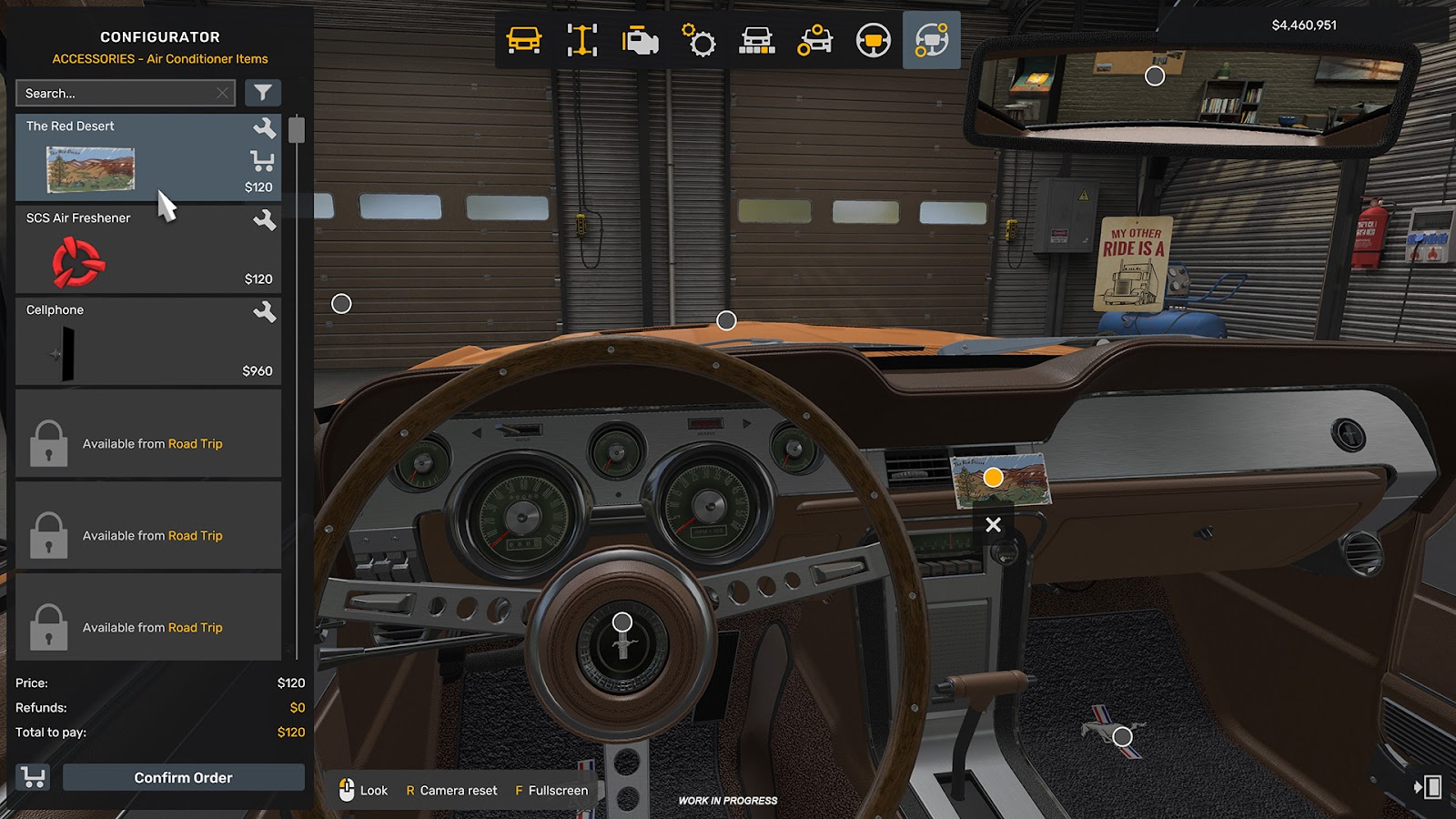
While working on Road Trip, SCS developed a new material system that handles reflected environmental light more convincingly. Different surfaces now respond differently to the world around the vehicle instead of relying almost entirely on direct light.
The technology uses several levels of dynamic reflection data, allowing materials such as leather, plastic and fabric to retain their own character without introducing the performance cost of a full global-illumination solution.
The interesting part is that the system was developed with Road Trip but was deliberately designed to work with trucks too. It has since been rolled out to a growing selection of ATS and ETS2 truck interiors.
RAM & Dodge Car Pack: the second Road Trip expansion
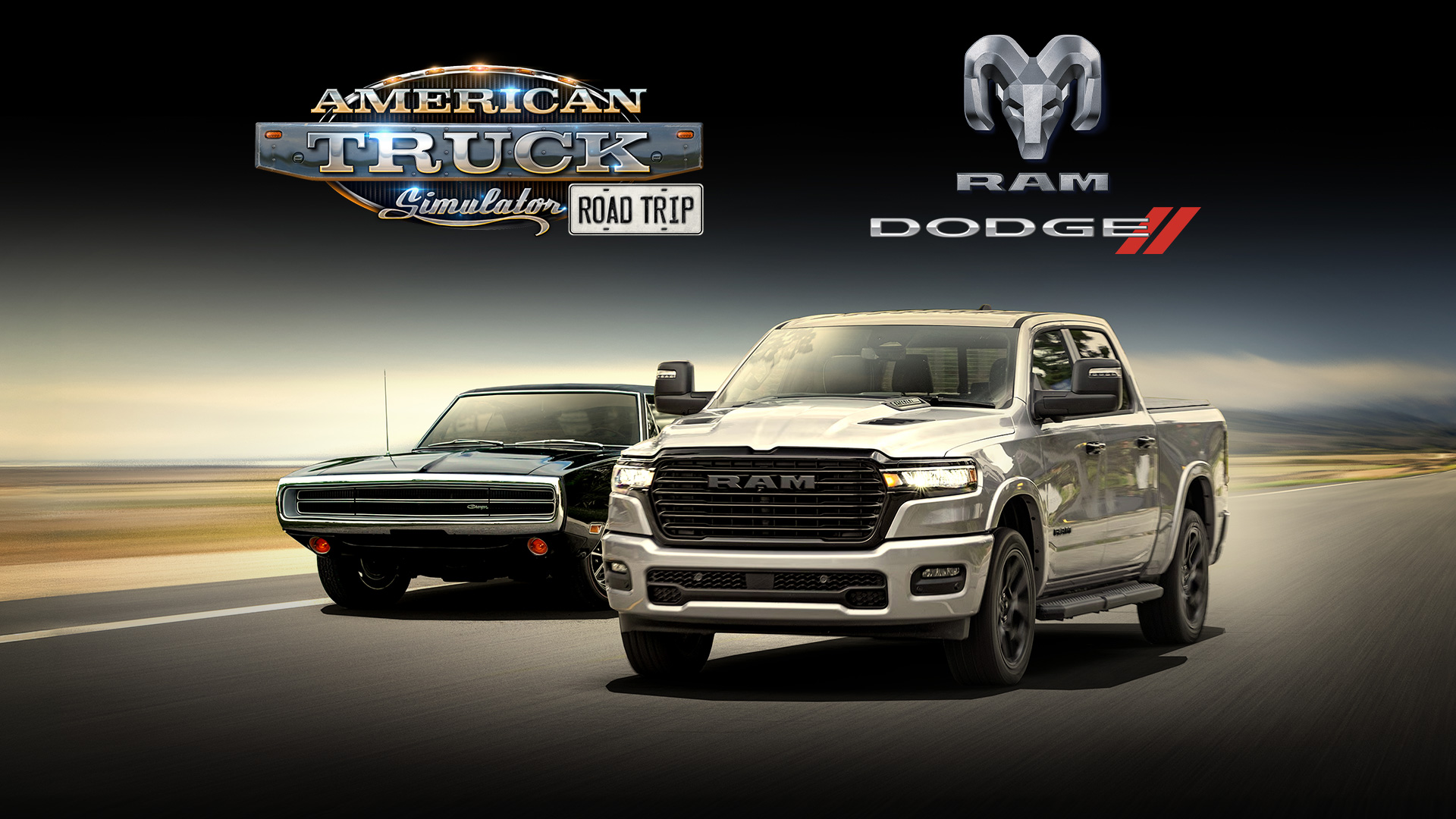
Ford is only the beginning. SCS has already announced a second Road Trip vehicle pack built around RAM and Dodge.
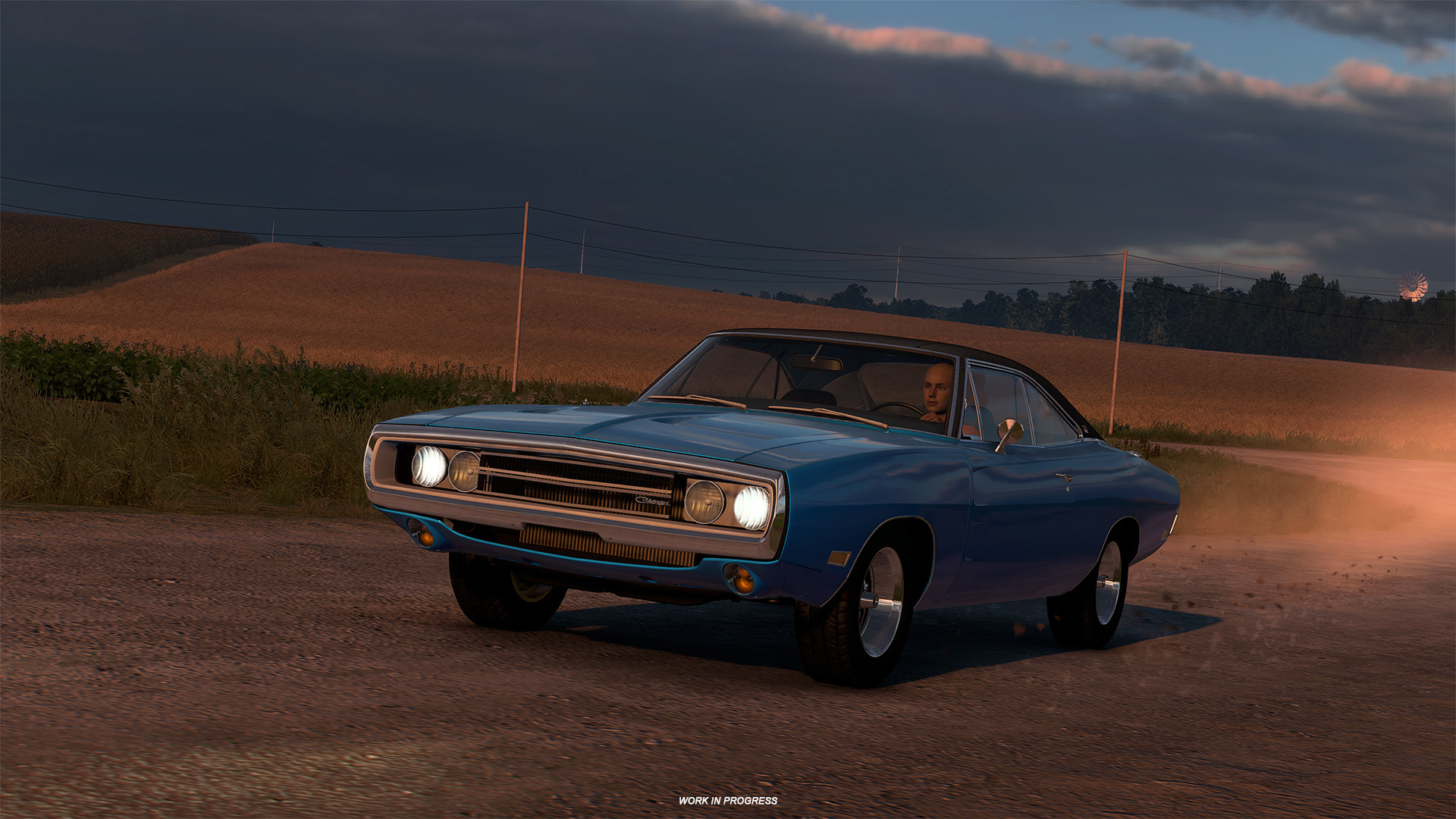
The planned lineup contains four very different vehicles: a RAM 1500 pickup, classic Dodge Charger, Dodge Viper and Dodge Challenger.
As with Ford, buying the RAM & Dodge pack will unlock Road Trip gameplay for players who do not already own another Road Trip DLC.
2023 Dodge Challenger SRT Hellcat Widebody
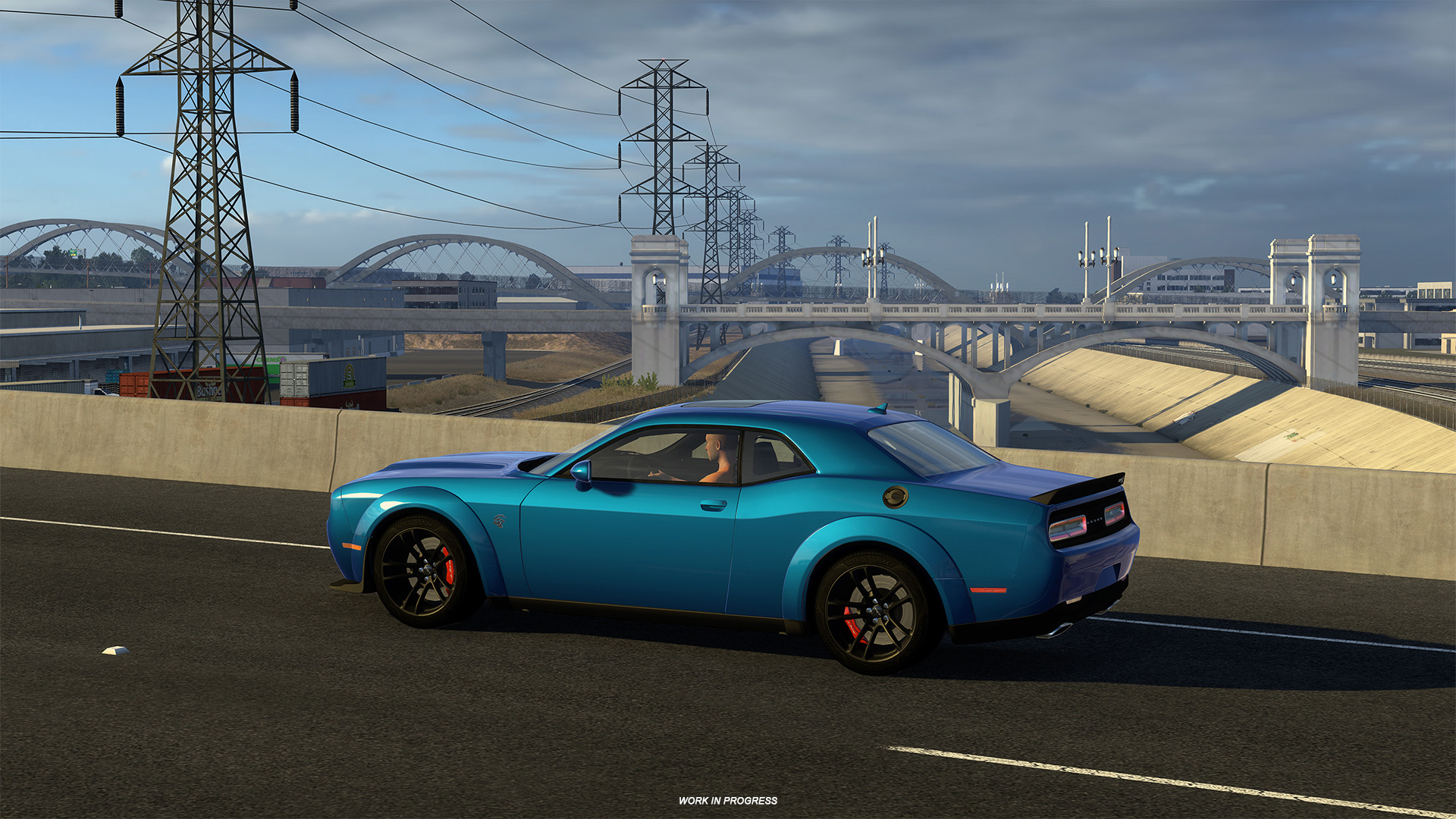
The Challenger is the RAM & Dodge vehicle SCS has shown in the most detail so far. The development preview focused on the 2023 SRT Hellcat Widebody, one of the most extreme versions of the modern Challenger.
Its wide arches, long bonnet and aggressive stance make it almost the opposite of the utilitarian vehicles traditionally associated with American Truck Simulator.
SCS has described Road Trip as being as much about atmosphere and the journey itself as raw performance. A car like the Challenger fits that idea: historic highways, small towns and scenic roads become destinations in themselves rather than scenery seen through the windscreen on the way to another depot.
Dodge Viper
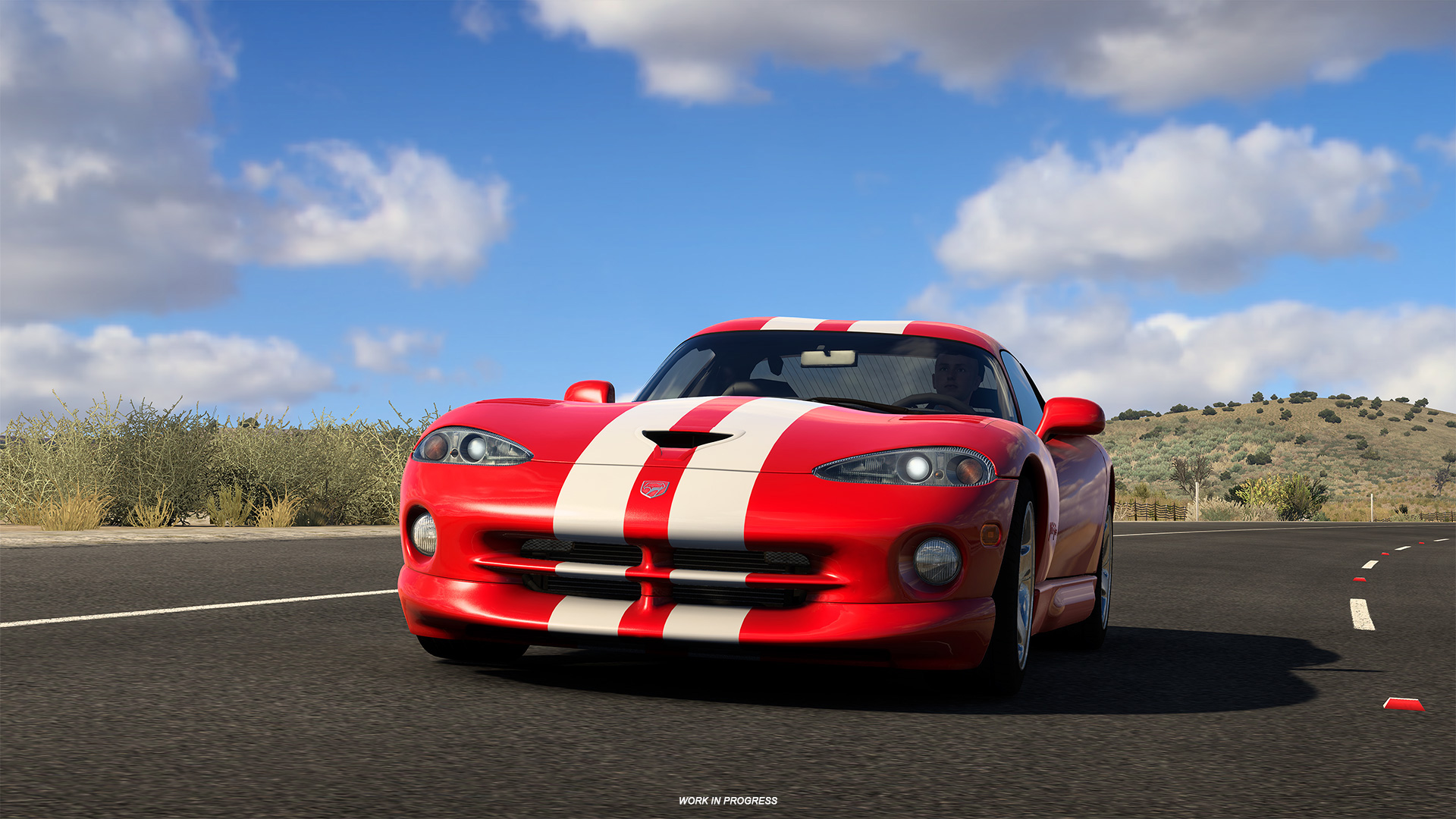
SCS travelled to Denton, Texas to document a privately owned 1997 Dodge Viper GTS for Road Trip.
The team scanned and photographed the car and gathered detailed reference material from both the exterior and interior. Working directly with preserved real vehicles gives the artists something much more useful than trying to rebuild an iconic sports car entirely from photographs found online.
The Viper is especially interesting because it represents a type of vehicle ATS has never officially supported before: a low, purpose-built American sports car with completely different proportions, visibility and driving behaviour from both a truck and a pickup.
RAM 1500 and classic Dodge Charger
The other two announced vehicles are the RAM 1500 and a classic Dodge Charger.
SCS has been more cautious about confirming exact production specifications for these vehicles. In the original pack announcement, the studio said engine and trim details were still being finalized.
An earlier community sound-recording request gives some insight into the vehicles SCS was researching. The studio looked for a 1970 Charger with a 426 Hemi V8 and a 2025 RAM 1500 with a 3.0-litre inline-six, alongside examples of the Viper and Challenger. Those requests are useful clues about the team’s research, but they should not be treated as final pack specifications until SCS confirms them.
Toyota and Nissan have also appeared in SCS’s Road Trip research
The Ford and RAM & Dodge packs are the only Road Trip vehicle packs officially announced so far, but one old SCS post provides an interesting glimpse at how much larger the project could eventually become.
When the studio asked owners to help record authentic sounds in April 2025, the wanted list did not stop at Ford and Dodge. It also included several Toyota and Nissan vehicles.
For Toyota, SCS was looking for examples including the Corolla GT-S, Supra, 4Runner, Sequoia, Tacoma and Tundra. The Nissan list included the Datsun 240Z, 240SX, GT-R and Frontier.
Even with that caveat, the list suggests Road Trip was being considered as more than a two-pack experiment from fairly early in development. The underlying Car Mode, Car Dealer and Mode Switch systems also make much more sense as long-term infrastructure than something built for only eight vehicles.
Mods reached this idea years before Road Trip

For the ATS modding community, passenger cars are nothing new.
Long before Road Trip was announced, players were already driving sedans, sports cars, pickups and SUVs through American Truck Simulator. This site has a dedicated Cars category containing thousands of those mods.
The quality varies enormously, but the popularity of car mods proved there was real interest in experiencing the ATS map without a semi-trailer attached.
Many car mods already offer detailed interiors, custom engines, sounds and altered handling. What they generally cannot provide is the deeper game integration Road Trip introduces: a dedicated career, customer ratings, Atlas exploration, official vehicle ownership, proper map support and a shared progression structure built into ATS itself.
Traffic mods can matter even more with Road Trip

Road Trip may also make traffic and environment mods more noticeable.
When driving a truck, much of the player’s attention naturally goes towards trailer positioning, junctions and delivery routes. In a car, the surrounding road environment becomes a larger part of the experience.
Mods such as US Car Culture already try to make regional traffic more believable by changing vehicle spawn rates and giving different parts of the country a more distinctive mix of cars.
Additional components adjust specifications, colours and licence plates. Combined with Road Trip’s exploration-focused gameplay, this kind of mod could become more relevant rather than less.
What Road Trip may mean for the future of American Truck Simulator
Road Trip is much easier to understand when viewed as a second career inside ATS rather than a DLC containing a few drivable cars.
SCS has built a Car Mode, a car dealership, separate vehicle ownership, courier jobs, a reputation system, exploration rewards, map infrastructure and a method for switching between multiple careers.
That is a surprising amount of underlying work if the only goal were to sell a Mustang and an F-150.
The Ford DLC shows the first complete version of the idea, while RAM & Dodge expands the vehicle selection. Atlas makes the enormous ATS map more useful to players who want to explore it rather than work through it. Courier jobs give cars a practical purpose. Mode Switch keeps the new career connected to the trucking game instead of splitting ATS into two separate products.
At the same time, SCS has been careful not to replace the identity of American Truck Simulator. Truck development continues, the trucking career remains its own mode, and several Road Trip improvements are deliberately shared back into the traditional game.
Road Trip changes what ATS can be without removing what it already is
American Truck Simulator is still a trucking simulator. Road Trip simply means the same map, engine and profile can now support another kind of driving experience alongside it. If SCS keeps expanding that framework with more manufacturers, cars and activities, this could end up being one of the most important structural changes in the game’s history.
And for players who have spent years downloading car mods simply to see the ATS world from a lower driving position, the biggest change is also the simplest one: passenger cars are finally becoming an official part of American Truck Simulator.